When to Choose Shockwave Therapy vs. Traditional Physiotherapy
When recovering from a musculoskeletal injury or managing chronic pain, navigating the sheer volume of available treatment modalities can be challenging. Patients are frequently presented with a choice between long-standing, traditional physiotherapy methods and newer, advanced interventions. Among the most prominent of these modern advancements is Extracorporeal Shockwave Therapy(ESWT).
Both approaches are highly effective, yet they operate through entirely different physiological mechanisms and serve distinct purposes within a rehabilitation plan. Understanding when to choose shockwave therapy over traditional physiotherapy—or how to combine them—is essential for optimising your recovery timeline and achieving long-term pain relief.
Defining the Modalities
To make an informed decision, it is first necessary to understand what each intervention entails.
Traditional Physiotherapy
Traditional physiotherapy is a comprehensive, holistic approach to rehabilitation. It utilises a combination of manual therapies (such as joint mobilisations and soft tissue massage), targeted exercise prescription, stretching and lifestyle advice. The primary objective is to restore movement, improve strength, correct biomechanical imbalances and prevent the recurrence of injuries. It addresses the entire kinetic chain rather than just the isolated site of pain.
Shockwave Therapy (ESWT)
Shockwave therapy is a non-invasive, highly targeted medical intervention. It involves the delivery of high-energy acoustic wave pulses directly to injured or degenerated tissues via a handheld device.
These acoustic pulses cause controlled micro-trauma in the targeted area. This micro-trauma stimulates blood circulation, triggers a localised inflammatory response, and accelerates the body’s natural cellular repair mechanisms. It is particularly effective in breaking down calcific deposits and stimulating collagen production in poorly vascularised tissues such as tendons.
Key Differences: Mechanism and Target Areas
The fundamental difference between these two treatments lies in their scope, execution, and biological action.
Traditional physiotherapy relies primarily on biomechanical loading and physical movement. It addresses the whole body or an entire limb segment, correcting structural weaknesses over ongoing weekly sessions. It is the ideal foundational treatment for acute injuries and post-surgical rehabilitation.
In contrast, shockwave therapy is a highly localised, high-intensity technology. Rather than relying on movement, it uses mechanical acoustic energy to trigger rapid cellular repair at a specific point of degeneration. Because of its intense nature, a standard course typically requires only three to five short sessions spaced one week apart, making it the premier choice for stubborn, chronic conditions that have failed to heal through movement alone.
When to Choose Shockwave Therapy
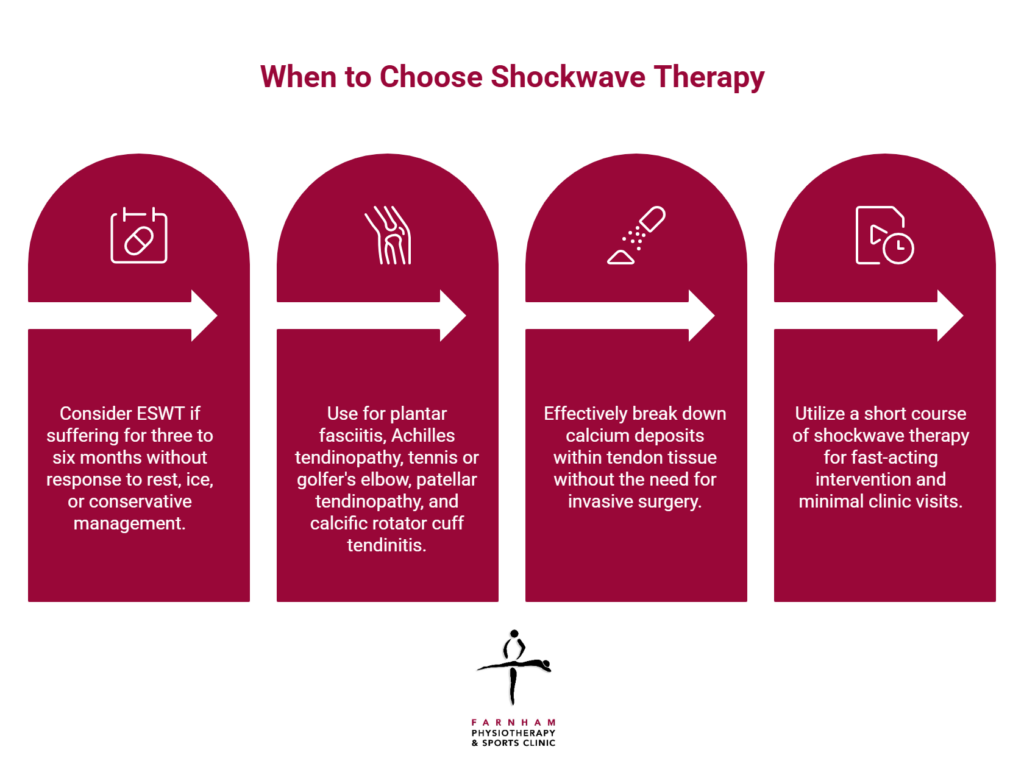
Shockwave therapy is not a general wellness treatment; it is a specialist tool designed for specific, stubborn conditions. You should consider ESWT under the following circumstances.
Chronic, Recalcitrant Conditions
If you have been suffering from a condition for more than three to six months and it has failed to respond to rest, ice, or conservative management, shockwave therapy is highly indicated.
Chronic Tendinopathies
It is considered a gold-standard treatment for stubborn tendon disorders. These include plantar fasciitis (heel pain), Achilles tendinopathy, tennis or golfer’s elbow, patellar tendinopathy (jumper’s knee), and calcific rotator cuff tendinitis in the shoulder.
Presence of Calcifications
When chronic inflammation causes calcium to build up within tendon tissue, it can result in significant pain during movement. Shockwave therapy effectively breaks down these calcific deposits without the need for invasive surgery.
Time-poor Rehabilitation
For individuals seeking a fast-acting intervention with minimal clinic visits, a short course of shockwave therapy can significantly accelerate initial pain relief.
When Traditional Physiotherapy Is Essential
While shockwave therapy is highly effective for localised tissue repair, traditional physiotherapy remains the cornerstone of comprehensive recovery. It is the superior choice for the following situations.
Acute Injuries
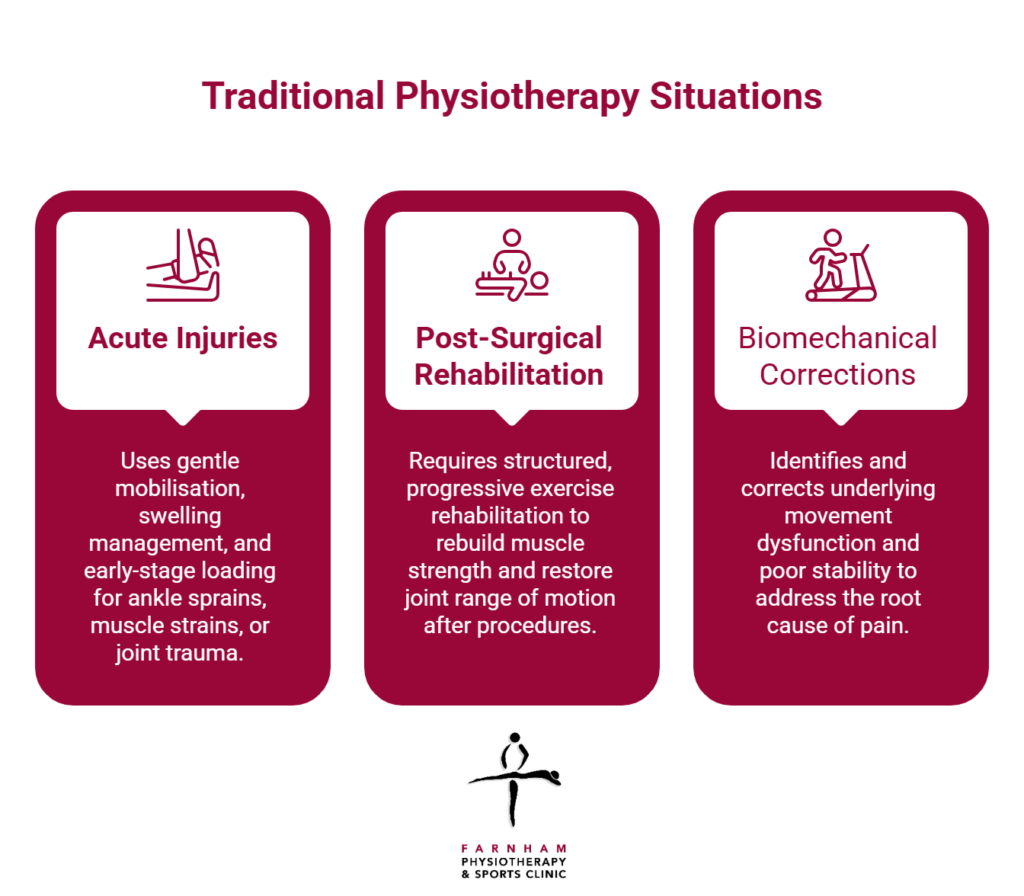
Immediately following an ankle sprain, muscle strain, or joint trauma, tissues are highly inflamed. Shockwave therapy is generally avoided during this acute phase. Traditional physiotherapy uses gentle mobilisation, swelling management, and early-stage loading to safely guide the healing process.
Post-Surgical Rehabilitation
Recovering from joint replacements, ligament reconstructions (such as an ACL repair), or arthroscopic procedures requires structured, progressive exercise rehabilitation to rebuild muscle strength and restore joint range of motion.
Biomechanical and Postural Corrections
If a runner develops knee pain due to poor hip stability or an abnormal gait, treating only the knee with shockwave therapy will provide only temporary relief. Traditional physiotherapy identifies and corrects the underlying movement dysfunction, addressing the root cause rather than simply relieving symptoms.
A Synergistic Approach
It is important to recognise that shockwave therapy and traditional physiotherapy are not mutually exclusive. In fact, clinical evidence demonstrates that they achieve the best outcomes when used together.
Shockwave therapy can be viewed as the catalyst that restarts the healing process in stagnant, chronic tissue, significantly reducing localised pain. Once the pain becomes manageable, traditional physiotherapy helps rebuild surrounding muscle strength, optimise joint biomechanics and reduce the likelihood of the injury returning.
How Farnham Physiotherapy and Sports Clinic Can Help
At Farnham Physiotherapy and Sports Clinic, we understand that no two injuries are identical. Our team of highly skilled clinicians does not rely on a one-size-fits-all approach. We provide comprehensive, individualised assessments to determine exactly which treatment pathway will deliver the fastest and most sustainable results for your body.
Our clinic is equipped with state-of-the-art radial shockwave therapy technology, allowing us to deliver precise, clinically proven treatment for stubborn, chronic conditions. If shockwave therapy is deemed appropriate for your condition, our expert physiotherapists seamlessly integrate it into a broader, bespoke rehabilitation programme. This means you benefit from the immediate pain-relieving effects of advanced acoustic wave technology alongside the long-term structural benefits of expert manual therapy and personalised exercise prescription.
Whether you are an elite athlete aiming to return to peak performance or an individual looking to enjoy pain-free daily walks around Surrey, we will guide you through every stage of your recovery journey with professional, evidence-based care.
Conclusion
Choosing between shockwave therapy and traditional physiotherapy depends heavily on the duration, type, and underlying cause of your condition. For chronic, stubborn tendon pain that has resisted standard treatments, shockwave therapy offers a powerful, non-invasive alternative to jumpstart cellular healing. Conversely, for acute trauma, post-operative recovery and correcting foundational movement patterns, traditional physiotherapy remains indispensable.
By partnering with the experienced team at Farnham Physiotherapy and Sports Clinic, you do not have to guess which option is right for you. Our clinicians will design a tailored recovery strategy that combines the cutting-edge power of technology with time-tested rehabilitative expertise, ensuring you return to optimal health as quickly and safely as possible.