The Hidden Cost of the Desk Job: Understanding the Link Between Posture and Shoulder Pain
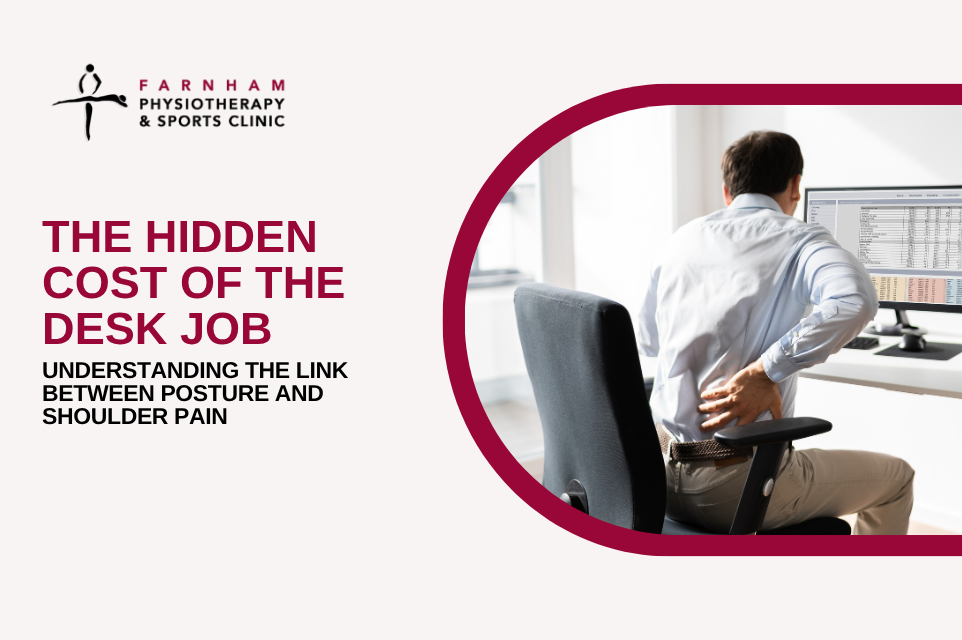
In today’s digital landscape, spending consecutive hours seated at a desk has become the norm for millions of professionals. While this sedentary lifestyle may seem harmless on the surface, prolonged static posture—characterized by rounded shoulders and a forward head position—can significantly impair shoulder function and trigger chronic pain (Cagnie et al., 2010). Musculoskeletal physiotherapists frequently treat patients whose debilitating shoulder issues are directly traced back to their daily desk-based work habits.
The Biomechanical Link Between Posture and Shoulder Pain
Poor desk posture fundamentally alters the delicate biomechanics of the shoulder girdle. When an individual adopts a forward head posture accompanied by thoracic kyphosis (an exaggerated rounding of the upper back), it forces the scapula (shoulder blade) to tilt anteriorly and rotate downward. This structural shift narrows the subacromial space—the narrow opening between the top of the arm bone and the shoulder blade—drastically increasing the risk of painful shoulder impingement (Kebaetse et al., 1999).
Over time, this malalignment breeds chronic muscle imbalances. The upper trapezius and pectoral muscles become adaptively tight and short, while the lower trapezius and serratus anterior muscles become weak and overstretched (Ludewig & Cook, 2000). Supporting this, research highlights that office workers experiencing neck and shoulder pain exhibit significantly higher rates of postural asymmetry and localized muscle fatigue compared to their symptom-free colleagues (Szeto et al., 2002).
Actionable Ergonomic Strategies to Protect Your Shoulders
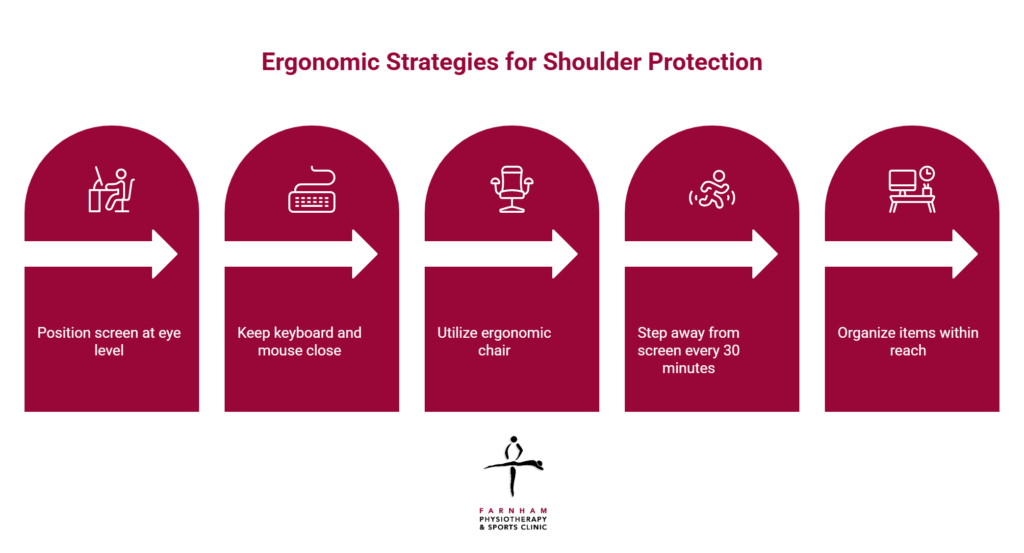
Optimizing your workspace environment is a crucial first line of defense to maintain neutral alignment and mitigate cumulative stress on the shoulder complex (van Niekerk et al., 2008). Implementing the following ergonomic modifications can dramatically reduce daily mechanical strain:
Optimized Monitor Height: Position your screen directly at eye level to eliminate the subconscious tendency to lean forward or crane the neck.
Proximity of Inputs: Keep your keyboard and mouse close to your body. Your elbows should rest at a 90-degree angle, allowing the shoulders to remain completely relaxed.
Active Chair Support: Utilize an ergonomic chair that provides robust lumbar support and adjustable armrests to share the weight of your upper extremities.
Frequent Movement Breaks: Step away from the screen or stand up every 30 minutes to stretch, move, and naturally reset your posture.
Strategic Desk Layout: Organize frequently used items within an immediate radius to avoid repetitive, awkward reaching throughout the day.
Clinical Interventions: How Physiotherapy Resolves Chronic Strain
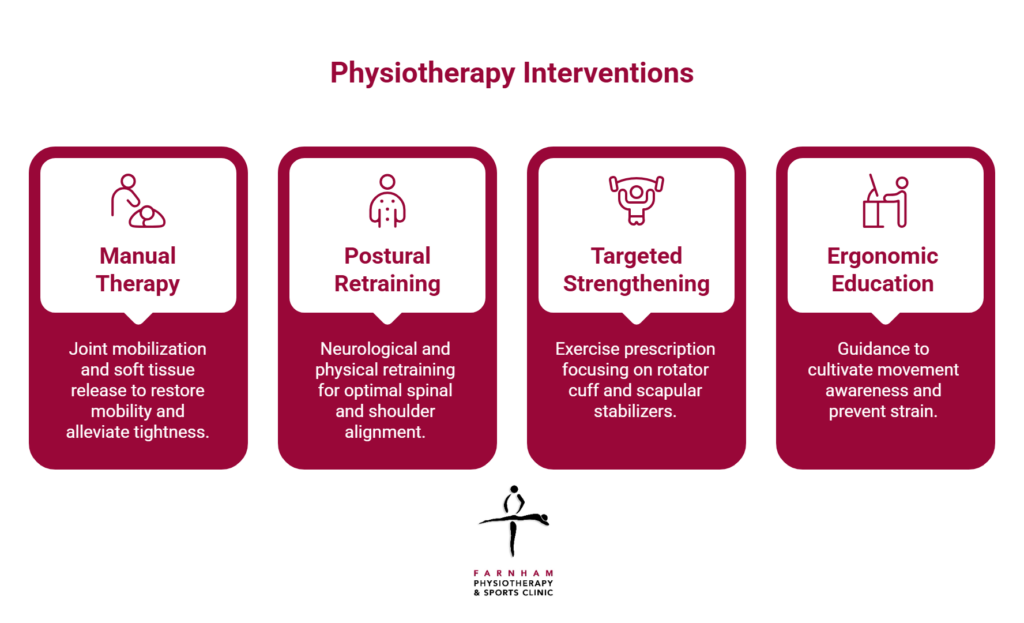
When postural adjustments at the desk are no longer enough to alleviate persistent discomfort, targeted physiotherapy offers a comprehensive path to recovery. Clinical treatment goes beyond temporary pain relief, focusing instead on correcting the root structural issues through a variety of professional interventions:
Manual Therapy: Targeted joint mobilization and soft tissue release to restore restricted joint mobility and alleviate muscular tightness.
Postural Retraining: Tailored neurological and physical retraining to help the body unconsciously maintain optimal spinal and shoulder alignment.
Targeted Strengthening: Personalized exercise prescription focusing heavily on the rotator cuff muscles and scapular stabilizers to restore structural balance.
Ergonomic & Movement Education: In-depth guidance to cultivate long-term movement awareness and prevent the recurrence of strain in the workplace.
Targeted Rehabilitation at Farnham Physiotherapy and Sports Clinic
At Farnham Physiotherapy and Sports Clinic, our specialized team is uniquely equipped to help desk-bound professionals overcome debilitating shoulder conditions. We understand that effective rehabilitation requires a highly individualized balance of advanced clinical skills and advanced healing technologies.
Our practitioners combine expert, hands-on manual therapy techniques with advanced modalities specifically chosen to accelerate tissue healing and manage acute discomfort. For patients struggling with severe or stubborn shoulder pain, we utilize evidence-based treatments including medical acupuncture for targeted pain relief, therapeutic ultrasound to reduce deep-tissue inflammation, and shockwave therapy to stimulate cellular repair in chronically strained tendons. By addressing both immediate pain and underlying postural faults, we ensure a comprehensive, long-term return to pain-free function.
Conclusion
Prolonged desk work poses a quiet but significant threat to upper-body musculoskeletal health, transforming simple postural habits into chronic shoulder dysfunction. However, shoulder pain does not have to be an inevitable byproduct of a desk job. By combining proactive ergonomic habits with timely clinical care, office workers can successfully protect their joints from wear and tear. Seeking early intervention from dedicated professionals, such as the team at Farnham Physiotherapy and Sports Clinic, is the most reliable way to reverse poor mechanics, eliminate pain, and safeguard your long-term physical well-being.