Farnham Physiotherapy > Blog > Physiotherapy > Deactivating the “Spasm Loop”: The Neuroscience of Medical Dry Needling for Chronic Upper Trapezius Knots
Deactivating the “Spasm Loop”: The Neuroscience of Medical Dry Needling for Chronic Upper Trapezius Knots
If you spend long hours working at a laptop, driving, or sitting in one position, you may be familiar with persistent tightness across the top of your shoulders. These uncomfortable areas are often described as “knots”, especially around the upper trapezius muscles.
Although many people assume these knots are simply tight muscles, persistent neck and shoulder discomfort can be more complex. Muscle sensitivity, repetitive loading, posture, stress, movement habits and the way the nervous system processes pain can all contribute.
For some patients, dry needling may be used as part of a wider physiotherapy treatment plan to help reduce pain and muscle sensitivity.
What is an Upper Trapezius Trigger Point?
A muscle “knot” is not literally a knot inside the muscle. The term myofascial trigger point is commonly used to describe a sensitive area within muscle tissue that may feel tight or tender when pressed.
Trigger points in the upper trapezius may be associated with local shoulder discomfort, reduced neck movement, headaches or pain that spreads into nearby areas.
These symptoms can develop for many reasons. Long periods of desk work, repetitive lifting, increased sporting activity, driving, poor recovery, stress or changes in exercise load may all contribute.
Because persistent pain rarely has only one cause, it is important to assess the whole picture rather than treating the sore area alone.
The Pain–Tension Cycle
When a muscle becomes painful or sensitive, people often unconsciously protect the area by tightening it or moving differently.
This can create a cycle where discomfort leads to more muscle guarding, reduced movement and increased sensitivity. Over time, the nervous system may also become more responsive to signals coming from the painful area.
This does not mean the pain is imaginary. Instead, it shows that persistent pain can involve both the tissues and the way the nervous system processes information.
Physiotherapy aims to interrupt this cycle by improving movement, reducing sensitivity and gradually restoring normal strength and confidence.
How Can Dry Needling Help?
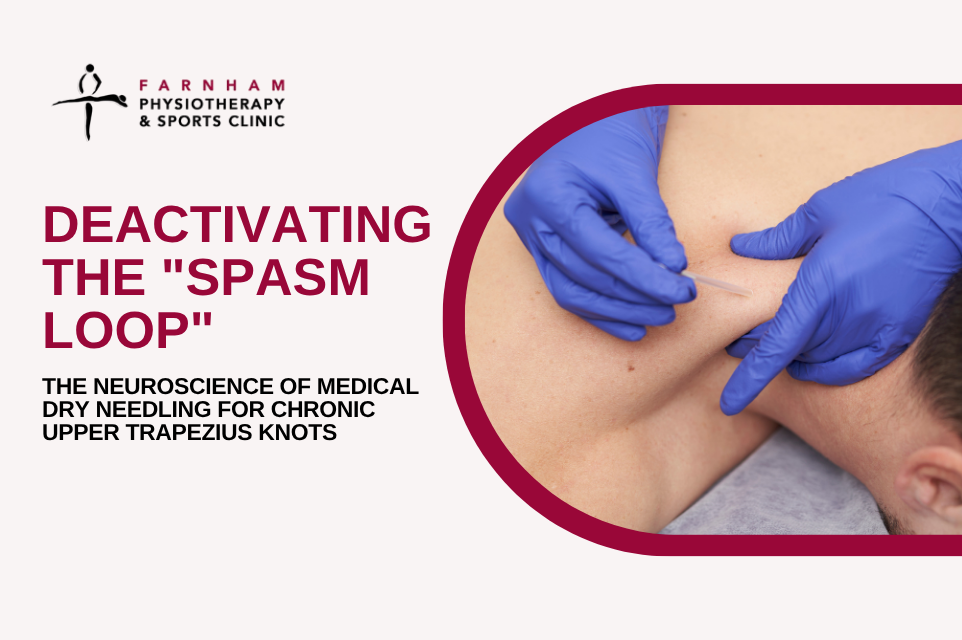
Dry needling involves inserting a fine, sterile needle into selected muscle tissue or trigger points following a clinical assessment.
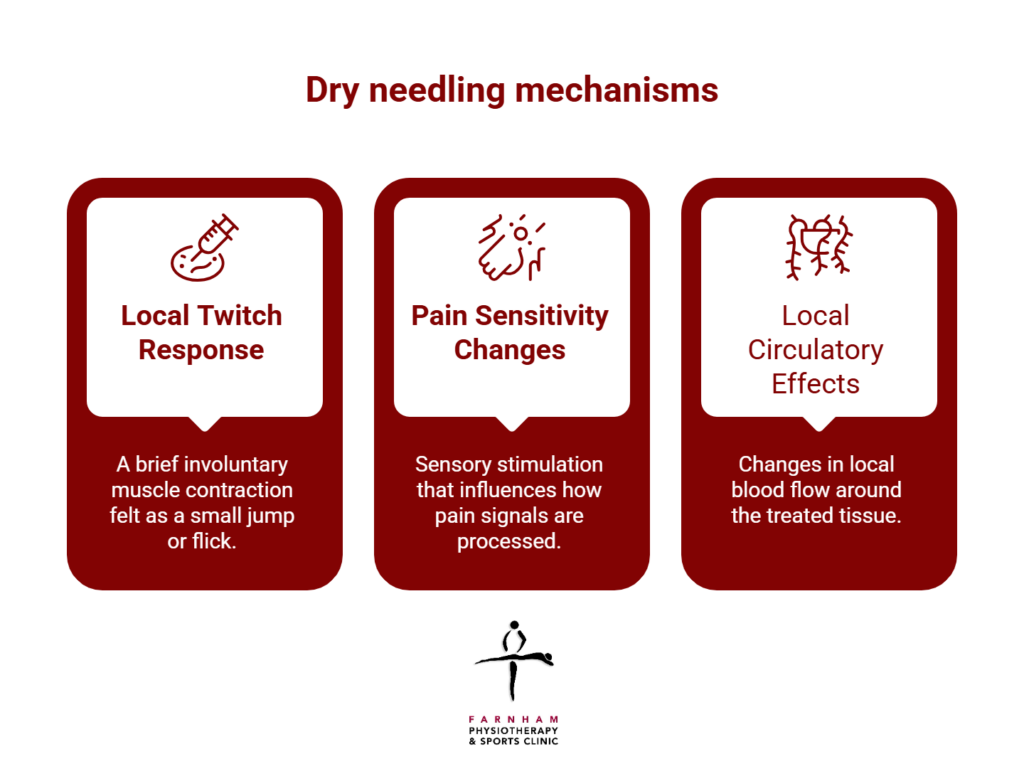
The exact mechanisms behind dry needling are still being studied. Research suggests that its effects may involve local muscular responses, changes in pain sensitivity, alterations in blood flow and changes in the way the nervous system processes pain.
For some patients, this can make movement more comfortable and allow rehabilitation exercises to be performed more effectively.
1. The Local Twitch Response
When a needle reaches a sensitive area of muscle, it may sometimes produce a brief involuntary contraction known as a Local Twitch Response.
This can feel like a small jump or flick of the muscle.
The response may be associated with temporary changes in muscle tension and sensitivity. However, a visible twitch is not always necessary for dry needling to be useful.
2. Changes in Pain Sensitivity
Dry needling provides sensory stimulation to the nervous system.
This stimulation may temporarily influence how pain signals are processed at the spinal cord and brain level. Some people experience a reduction in pain or tenderness after treatment, although responses vary between individuals.
Rather than describing dry needling as “switching pain off”, it is more accurate to view it as one possible way of helping reduce sensitivity while other parts of rehabilitation address strength, movement and activity.
3. Local Circulatory Effects
Needling may also produce changes in local blood flow around the treated tissue.
These responses are among the mechanisms researchers continue to investigate when studying dry needling.
However, claims that dry needling “flushes toxins” or removes waste products should be avoided. The effects are better understood as part of a broader physiological response rather than a simple cleansing process.
Dry Needling Is Not a Stand-Alone Cure
One of the most important points is that dry needling is usually most useful when combined with a broader treatment programme.
If your upper trapezius keeps becoming painful because of prolonged desk work, reduced shoulder strength, limited neck movement or repetitive activity, treating the sensitive area alone may not provide lasting improvement.
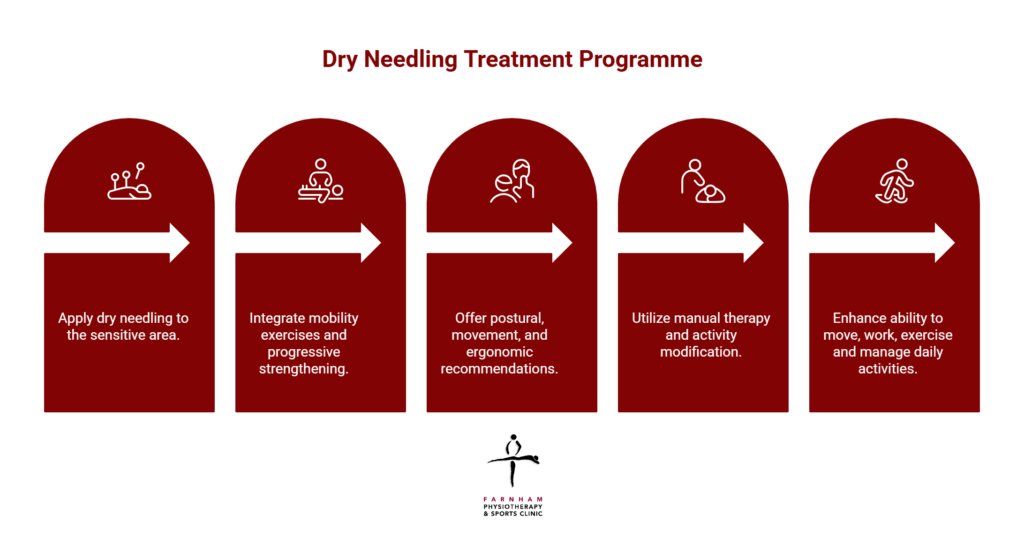
A physiotherapist may therefore combine dry needling with:
Mobility exercises
Progressive strengthening
Postural and movement advice
Manual therapy
Activity modification
Workplace or ergonomic recommendations
The aim is not simply to reduce discomfort temporarily, but to improve your ability to move, work, exercise and manage daily activities more comfortably.
How Farnham Physiotherapy & Sports Clinic Can Help
At Farnham Physiotherapy & Sports Clinic in Farnham, Surrey, dry needling may be considered as part of an individual physiotherapy programme where clinically appropriate.
The first step is a detailed assessment.
Your physiotherapist can examine your neck and shoulder movement, muscle function, activity levels, work demands and other factors that may be contributing to your symptoms.
If dry needling is suitable, it can be used alongside exercise and other physiotherapy techniques rather than as an isolated treatment.
This approach is particularly important for people whose shoulder tension repeatedly returns after massage, stretching or short periods of rest.
Instead of simply treating the “knot”, the aim is to understand why the area may be becoming overloaded or sensitive in the first place.
Conclusion
Persistent upper trapezius knots can involve more than simple muscle tightness. Movement habits, muscle loading, stress and nervous-system sensitivity can all contribute to ongoing neck and shoulder discomfort.
For some patients, dry needling may help reduce pain and muscle sensitivity, particularly when used along with appropriate exercise, education and rehabilitation.
If persistent neck or shoulder tension is affecting your work, driving, sleep or exercise, an assessment at Farnham Physiotherapy & Sports Clinic can help identify the factors contributing to your symptoms and determine whether dry needling should form part of your treatment plan.