Shockwave vs. Calcific Tendonitis: Shattering the Micro-Crystals in Your Shoulder
If you have ever experienced a sudden, sharp, deep ache in your shoulder that makes it impossible to sleep, reach for a seatbelt, or raise your arm, you know how debilitating shoulder pain can be. While rotator cuff strains and impingements are common culprits, there is another, far more agonising condition that often flies under the radar: calcific tendonitis.
When microscopic calcium hydroxyapatite crystals build up inside the tendons of your rotator cuff, the resulting pressure and inflammation can significantly restrict your shoulder movement. Fortunately, modern sports medicine offers conservative treatment options alongside more invasive interventions and steroid injections.
Today, Extracorporeal Shockwave Therapy (ESWT) offers a non-invasive, targeted treatment option designed to help break down these micro-crystals and improve mobility.
What is Calcific Tendonitis of the Shoulder?
Calcific tendonitis occurs when calcium deposits accumulate within the tendons of the shoulder—most commonly the supraspinatus tendon. Unlike general tendon wear and tear, calcific tendonitis involves the physical build-up of chalk-like micro-crystals.
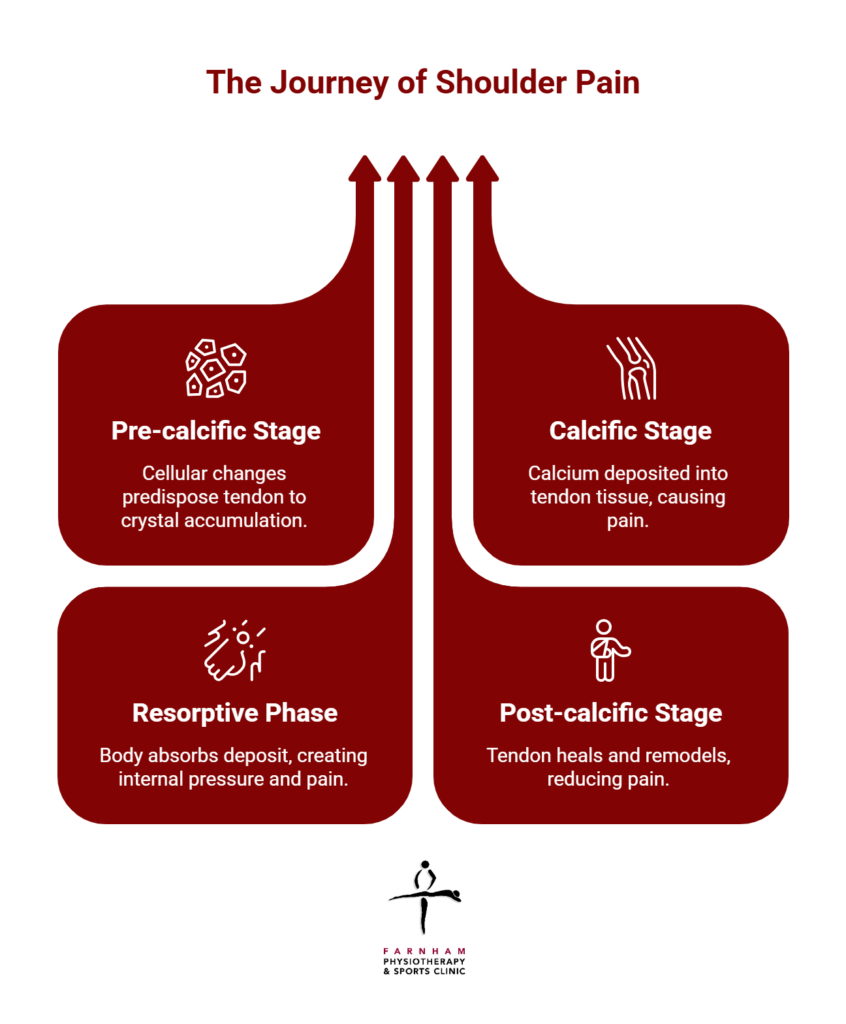
The condition typically progresses through three distinct stages:
Pre-calcific Stage: Cellular changes occur in the tendon, predisposing it to crystal accumulation.
Calcific Stage: Calcium is deposited into the tendon tissue. This stage is subdivided into a resting phase, where the deposit is stable and may cause a mild ache, and a resorptive phase. The resorptive phase is often when intense, acute pain occurs as the body attempts to absorb the deposit, creating significant internal pressure.
Post-calcific Stage: The body attempts to heal and remodel the tendon tissue.
Without targeted intervention, calcific deposits can persist for months or even years, potentially leading to chronic stiffness, weakness, and disrupted sleep.
How Shockwave Therapy Shatters Micro-Crystals
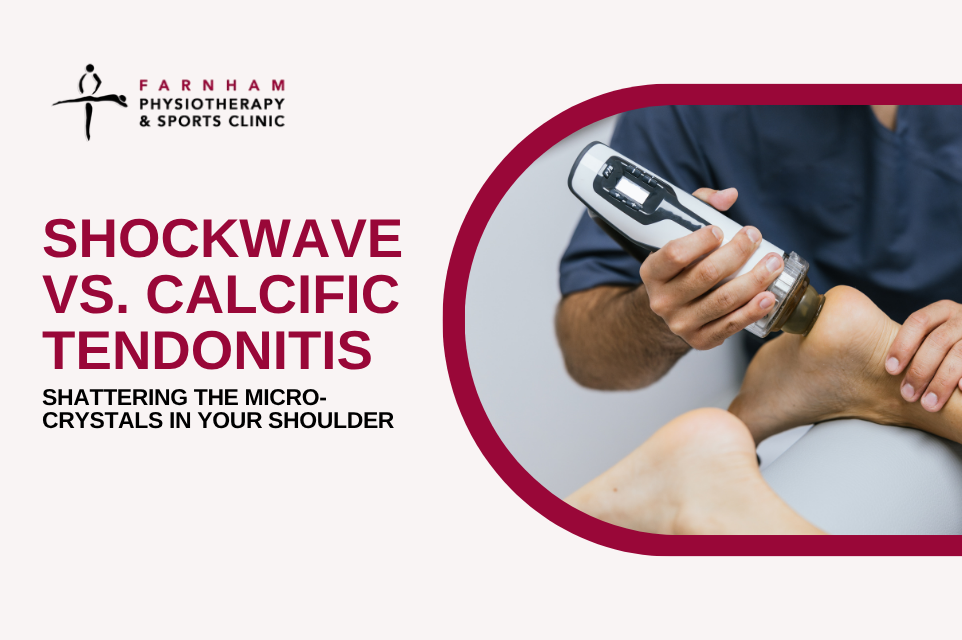
Shockwave therapy, specifically Extracorporeal Radial Shockwave Therapy (RSWT), uses high-energy acoustic waves applied directly to the skin over the affected area. Rather than acting like an electrical “shock”, these acoustic pulses generate mechanical energy that penetrates the rotator cuff tissue.
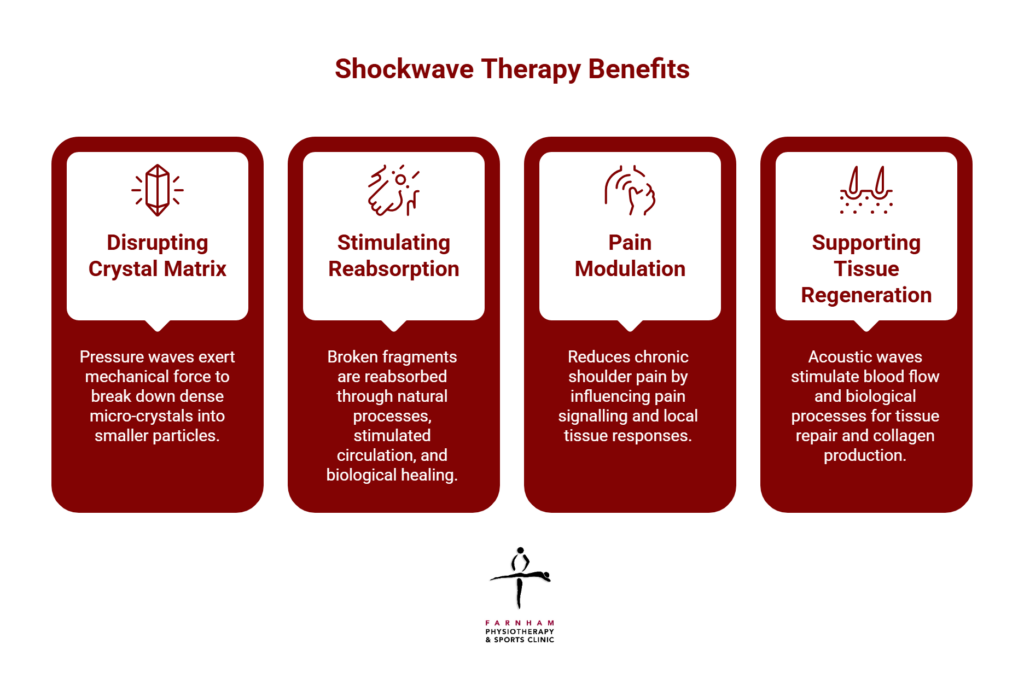
Here is how shockwave therapy can target calcific tendonitis:
Disrupting the Crystal Matrix: The pressure waves exert mechanical force on the calcium deposits, helping to break down the dense micro-crystals into smaller particles.
Stimulating Reabsorption: Once the calcium deposits have been broken down into smaller fragments, the body’s natural processes can help reabsorb them. Shockwave therapy can also stimulate localised circulation and a biological healing response.
Pain Modulation: Shockwave therapy may help reduce chronic shoulder pain by influencing pain signalling and local tissue responses.
Supporting Tissue Regeneration: The acoustic waves can stimulate blood flow and biological processes associated with tissue repair and collagen production.
Shockwave Therapy vs. Traditional Treatments
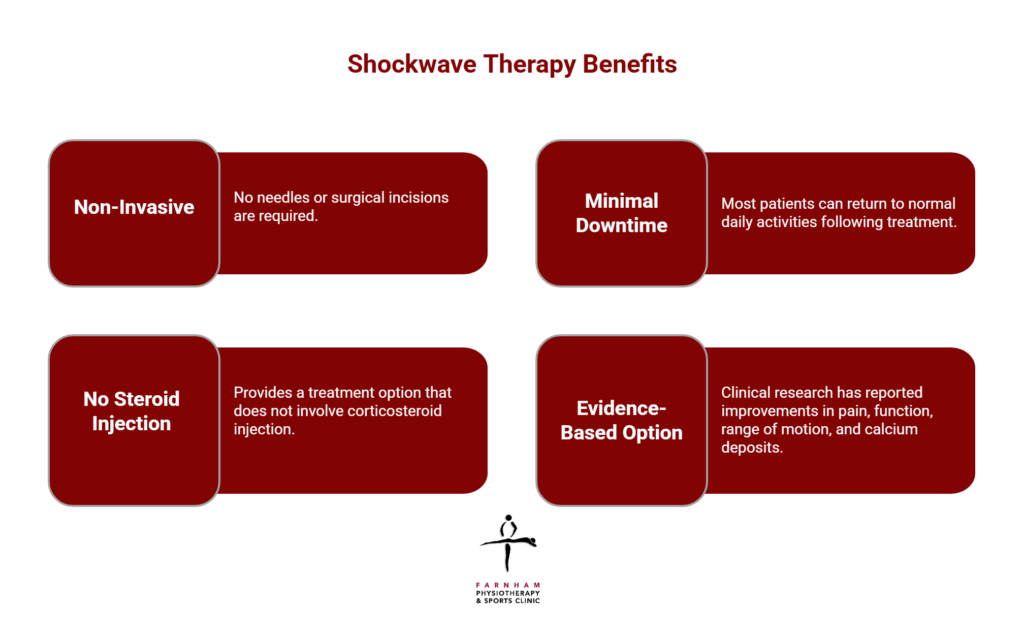
When faced with calcific tendonitis, patients may be offered cortisone injections, ultrasound-guided needling (barbotage), or, in some cases, arthroscopic surgery. While each treatment has its place, shockwave therapy can provide a useful conservative option:
Non-Invasive: No needles or surgical incisions are required.
Minimal Downtime: Most patients can return to normal daily activities following treatment, depending on their symptoms and their physiotherapist’s advice.
No Steroid Injection: Shockwave therapy provides a treatment option that does not involve corticosteroid injection.
Evidence-Based Option: Clinical research has reported improvements in pain, function, range of motion, and calcium deposits following courses of shockwave therapy, although individual outcomes and the number of sessions required can vary.
How Farnham Physiotherapy and Sports Clinic Can Help
Breaking down calcium deposits is only one part of managing shoulder pain. Lasting recovery may also require a comprehensive, expert-led approach that addresses strength, joint mechanics, and movement patterns.
At Farnham Physiotherapy and Sports Clinic, patient care goes beyond simply applying technology—it centres on delivering personalised, evidence-based treatment plans tailored to your specific needs and lifestyle.
Here is how the expert team at Farnham Physiotherapy and Sports Clinic can support your recovery:
1. Accurate Clinical Assessment & Targeted Treatment
Before starting treatment, the clinical team performs a thorough physical assessment to evaluate your shoulder movement, rotator cuff function, symptoms, and contributing factors. This helps determine whether shockwave therapy is appropriate and where treatment should be targeted.
2. Advanced Shockwave Therapy
Farnham Physiotherapy and Sports Clinic uses Radial Shockwave Therapy (RSWT). Treatment sessions are relatively quick, and the intensity can be adjusted according to your individual comfort and treatment requirements.
3. Integrated Rotator Cuff Rehabilitation
Shockwave therapy can support the healing process, but rehabilitative exercise is also an important part of recovery. The physiotherapists design customised exercise programmes to rebuild rotator cuff strength, improve scapular stability, and reduce compensatory strain on the neck and upper back.
4. Manual Therapy & Guidance
To complement shockwave sessions, clinicians may use manual therapy techniques to reduce surrounding muscle tension and improve joint mobility. They can also provide clear guidance on post-treatment care and activity modification to support your recovery.
Conclusion
Living with the debilitating pain of shoulder calcific tendonitis does not necessarily mean settling for long-term stiffness, repeated injections, or invasive surgery. By using targeted acoustic waves, shockwave therapy can help address calcific deposits, support the body’s natural healing response, and promote tendon recovery.
When combined with the specialist care, clinical assessment, and progressive exercise programmes offered by Farnham Physiotherapy and Sports Clinic, shockwave therapy can form part of a comprehensive, non-invasive approach to helping you return to an active lifestyle.
If persistent shoulder pain is disrupting your sleep or limiting your movement, contact Farnham Physiotherapy and Sports Clinic to arrange an assessment and find out whether shockwave therapy may be suitable for you.