



Welcome to Farnham Physiotherapy & Sports Clinic

Call us
Send an email
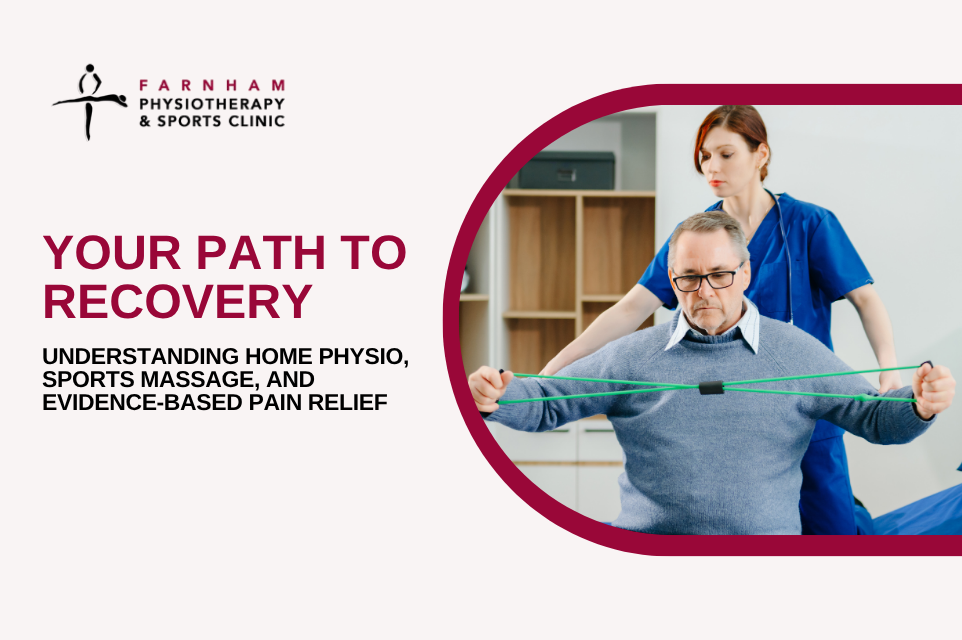
While understanding the causes of discomfort is the first step, true recovery lies in choosing the right treatment pathway for your unique lifestyle. Musculoskeletal health is not a “one-size-fits-all” journey; it requires a versatile toolkit that addresses everything from acute injury to long-term wellness. Whether you are limited by mobility, recovering from a sporting event, or seeking evidence-based relief for chronic tension, modern physiotherapy offers specialized interventions designed to meet you exactly where you are. The following sections explore how home-based care, soft tissue therapy, and clinical needling techniques provide a comprehensive approach to getting you back to your best.
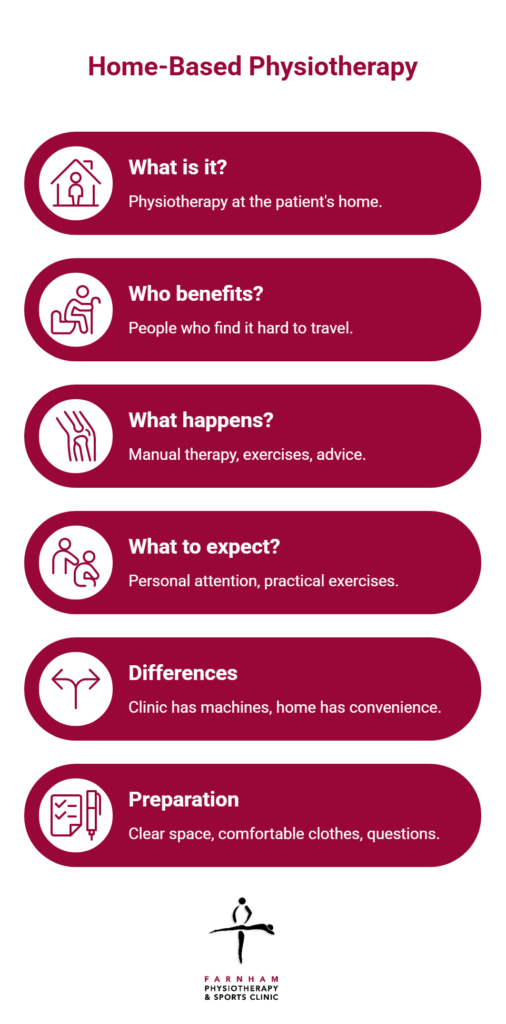
Physiotherapy is a type of healthcare that helps people move better, feel stronger, and recover from injuries or pain. Usually, people go to a clinic to see a physiotherapist, but sometimes the therapist comes to the patient’s home. This is called home-based physiotherapy, and it means the treatment happens right where the patient lives. It is especially helpful because the therapist can see how the patient moves in their own environment and can suggest exercises that fit into daily life.
Home-based physiotherapy is most useful for people who find it hard to travel. For example, someone who has just had surgery on their knee or hip may struggle to walk or drive to a clinic. Older adults who have trouble moving around also benefit from having therapy at home. People with long-term conditions, such as arthritis or neurological problems, often feel more comfortable doing exercises in their own space. Even busy people who cannot spare time to travel may prefer this option.
A home physiotherapy session usually includes many of the same things you would get in a clinic. The therapist may use manual therapy, which means using their hands to gently move or massage muscles and joints. They will also teach exercises to make the body stronger and more flexible. Sometimes, they use simple tools like elastic bands or small weights. The therapist also gives advice about posture, how to sit or stand properly, and how to avoid movements that cause pain. The goal is to help the patient do everyday activities—like walking, climbing stairs, or lifting objects—more easily.
When someone chooses home-based physiotherapy, they should know what to expect. The therapist will give personal attention and design exercises that fit the home setting. However, patients should not expect large machines or special equipment, because those are usually only available in clinics. Also, recovery takes time, so results will not happen overnight. Patients need to join in actively, practicing exercises regularly, rather than waiting for the therapist to “fix” everything.
There are some differences between clinic-based and home-based physiotherapy. In a clinic, patients can use advanced machines and sometimes join group sessions. The environment is controlled, and therapists may have more tools available. At home, the focus is on convenience and comfort. The therapist works with what is available in the house, which makes the exercises more practical for daily life. Both options are effective, but the choice depends on the patient’s needs and situation.
To get ready for a physiotherapist’s visit at home, patients should clear a safe space to move around, wear comfortable clothes, and keep any small equipment like mats or bands nearby. It also helps to prepare a list of questions or notes about pain and progress, so the therapist can understand what has changed since the last session. This preparation makes the visit smoother and more useful.
What is Sports Massage?
Sports massage, also known as soft tissue massage, is a therapeutic treatment that focuses on the muscles, tendons, and ligaments of the body. It uses skilled manual techniques to reduce tension, improve circulation, and support recovery from injury or physical stress. Unlike a relaxation massage, sports massage is targeted and purposeful—it is about helping the body perform at its best and heal effectively (Federation of Holistic Therapists, 2024).
Who is Qualified in the UK?
In the UK, sports massage should only be carried out by qualified therapists who have completed accredited training. Professional bodies such as the Sports Massage Association (SMA) and the Institute for Soft Tissue Therapists (ISRM) ensure that practitioners meet high standards of education and practice. Many physiotherapists also train in sports massage, combining clinical knowledge with hands-on skills to deliver safe and effective treatment.
Why Do People and Athletes Visit?
People often search for “sports massage near me” because they want relief from muscle pain, stiffness, or injury. Athletes visit sports therapists to prepare for competitions, recover after intense training, or prevent injuries before they happen. Everyday individuals—such as office workers with tight shoulders or runners with sore calves—also benefit from sports massage. It is not just for elite athletes; anyone experiencing muscle tension or reduced mobility can gain from it.
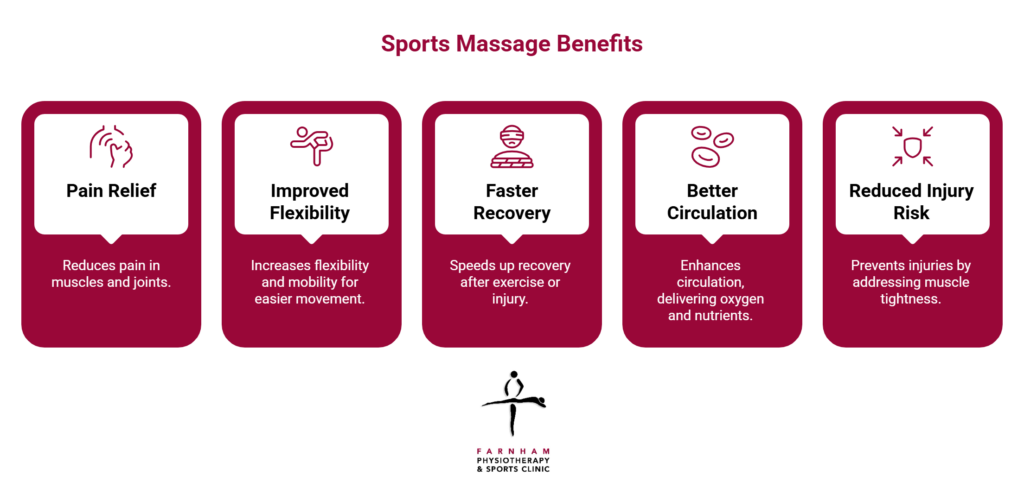
Benefits of Sports Massage
The benefits of sports massage are wide-ranging:
These benefits make sports massage one of the most effective ways to keep the body healthy and active.
Many people hesitate because they think sports massage is only for athletes or that it might be painful. The truth is that sports massage is adapted to each person’s needs. Experienced therapists adjust pressure and techniques to suit comfort levels. At our clinic, our physiotherapists and massage therapists are highly trained, genuine professionals who listen carefully to each patient’s concerns. We explain the process clearly, set realistic expectations, and show how even one session can make a noticeable difference in pain and movement.
Real benefits—such as being able to walk without stiffness, train harder without injury, or simply feel more relaxed
We help people understand that sports massage is not a luxury, but a practical step toward better health.
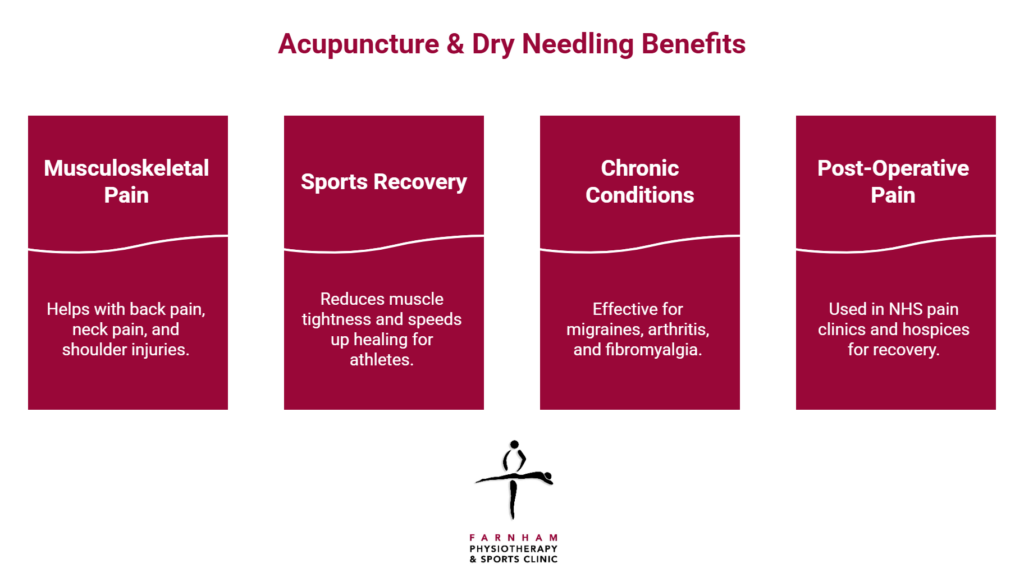
Acupuncture is an ancient Chinese practice that involves inserting fine needles into specific points on the body to restore balance and relieve discomfort. In modern healthcare, it is often used to stimulate nerves and encourage the release of natural pain-relieving chemicals like endorphins (NHS, 2024). Dry needling, on the other hand, is a Western medical technique. It targets “trigger points”—tight bands of muscle that can cause pain or limit movement. By inserting thin needles directly into these points, therapists can release tension and improve function (Avenue Health, 2024).
Evidence-Based Benefits
Research shows that both acupuncture and dry needling can help with:
Studies highlight that the benefits often come from the body’s natural response: increased blood flow, reduced inflammation, and the release of endorphins that ease pain.
Real-Life Examples
These examples show how the therapies are not limited to elite athletes—they are practical for everyday people managing pain or recovering from injury.
What to Expect
During a session, the therapist will first assess your condition. Fine, sterile needles are then inserted into specific points or trigger areas. Patients often describe the sensation as mild pressure or tingling rather than pain. Some feel immediate relief, while others notice improvement after several sessions. Importantly, these treatments are performed by qualified healthcare professionals trained in safe needle techniques, ensuring both effectiveness and safety.
Many people hesitate because they think acupuncture or dry needling is painful or only for “alternative medicine.” In reality, these are evidence-based treatments widely used in NHS settings and private clinics. At our clinic, our physiotherapists and sports therapists are highly trained, combining years of experience with modern research. We explain the science clearly, share real-life success stories, and tailor each session to the patient’s comfort level. This helps patients feel confident that they are receiving professional, effective care.
Conclusion
Acupuncture and dry needling are powerful, evidence-backed therapies that help people recover from pain and injury. Whether you are an athlete aiming to perform better, an office worker struggling with muscle tension, or someone recovering from surgery, these treatments can make a genuine difference. With qualified therapists and a focus on patient-centered care, they offer safe, effective solutions for everyday health challenges.
The journey to physical recovery and peak performance is rarely a straight line, but with the right support, it is a path anyone can navigate. Whether you are taking advantage of the convenience of Home-Based Physiotherapy, releasing deep-seated tension through Soft Tissue and Sports Massage, or utilizing the targeted relief of Acupuncture and Dry Needling, the goal remains the same: restoring your freedom of movement.
At Farnham Physiotherapy and Sports Clinic, we believe that effective care is built on a foundation of professional expertise and patient-centered trust. By combining traditional hands-on skills with modern, evidence-based research, we provide the tools you need to manage pain, prevent injury, and improve your overall quality of life. You don’t have to settle for persistent stiffness or limited mobility—taking a proactive step toward these specialized therapies today is an investment in a stronger, more active tomorrow.


2 Comments
Marc Thomas April 29, 2026
you are truly a just right webmaster The site loading speed is incredible It kind of feels that youre doing any distinctive trick In addition The contents are masterwork you have done a great activity in this matter
lucky-Fungab April 29, 2026
Die Plattform unter dem Namen luckycapone verfügt Besuchern aus der Eidgenossenschaft einen aktuellen digitalen Zugang zu einem Casino, welches sich durch ein attraktives Aussehen und eine breite Palette an Spielen herausragt luckycapone login . Als vertrauenswürdige Seite des luckycapone casino richtet sie sich speziell an Nutzer, die, auf der Suche nach einer zuverlässigen Alternative zu klassischen Glücksspielanbietern gehen. Besonders imposant ist die übersichtliche Aufteilung, die es Neulingen ermöglicht, sich effizient zu navigieren, gleichzeitig geübte Casino-Fans auf eine Fülle an Optionen zugreifen. Wer sich für die luckycapone erfahrungen informieren möchte, entdeckt auf der Seite überraschenderweise detaillierte Meinungen, und zusätzlich detaillierte Informationen zu den zahlreichen Spielmöglichkeiten. Die Plattform legt besonderen Wert auf ihre Klare Kommunikation, das bei der luckycapone login-Prozedur entscheidend ist, denn sie eine zuverlässige und einfache Einschreibung verspricht. Für Spieler, die, die Bedeutung von ein luckycapone online-Erlebnis nach schweizerischen Standards setzen, ist diese Plattform eine überzeugende Entscheidung.
Ein grundlegender Stärkenpunkt des luckycapone casino besteht, in seinen modernen Elementen, welche sowohl die Spielvielfalt wie auch die Benutzerfreundlichkeit steigern. Die Plattform bietet eine Palette an Echtzeit-Casino-Spielen, wobei Spieler direkt mit echten Dealern verkehren können, was das Erlebnis eines echten Casinos erzeugt. Weiterhin imponiert sie durch ständige Updates und Anreizangebote, die gezielt auf die Bedürfnisse der Spieler abgestimmt werden. Besonders hilfreich ist die Verknüpfung eines smartphone-optimierten Aufbaus, sodass Nutzer beim Reisen auf ihr luckycapone ch-Konto zugreifen können und direkt spielen. Die effiziente Bearbeitung von Finanzbewegungen und die transparente Aufbereitung der Unterhaltungsmodalitäten generieren Sicherheit und Vertrauen. Wer sich für ein casino luckycapone begeistert ist, wertschätzt zudem die Chance, unterschiedliche Bezahlsysteme zu nutzen, welche an die schweizerischen Standards konform gehen. Diese Kombination aus Fortschritt und Unterstützung stellt die Seite zu einer überzeugenden Lösung für alle, diejenigen, die Wert auf Exzellenz und Produktivität schätzen.
Das luckycapone casino erfüllt vor allem Spieler an, welche, die eine moderne, trotzdem vertrauenswürdige Plattform suchen, welche speziell auf die Bedürfnisse der eidgenössischen Nutzer zugeschnitten ist. Ideal ist diese Website für alle, welche, die Wert auf eine problemlose Registrierung legen und zugleich Zugang zu einer großen Auswahl an Spielen erhalten. Besonders überzeugend ist die Plattform für Einsteiger, die, die sich durch die selbstverständliche Steuerung und die ausführlichen Nutzermeinungen effizient navigieren können. Weiterhin bietet sie geübten Casino-Fans anspruchsvolle Optionen, welche das traditionelle Casino-Spiel mit aktuellen Innovationen kombinieren. Am Resultat ist zu konstatieren, dass das luckycapone casino durch seine Synthese aus Handhabung, Sicherheit und Spielvielfalt eine attraktive Lösung im Schweizer Online-Casino-Bereich repräsentiert. Wer nach einem zuverlässigen und unterhaltsamen luckycapone official site fragt, stößt hier eine Plattform, die diese Wünsche vollumfänglich bedient.